
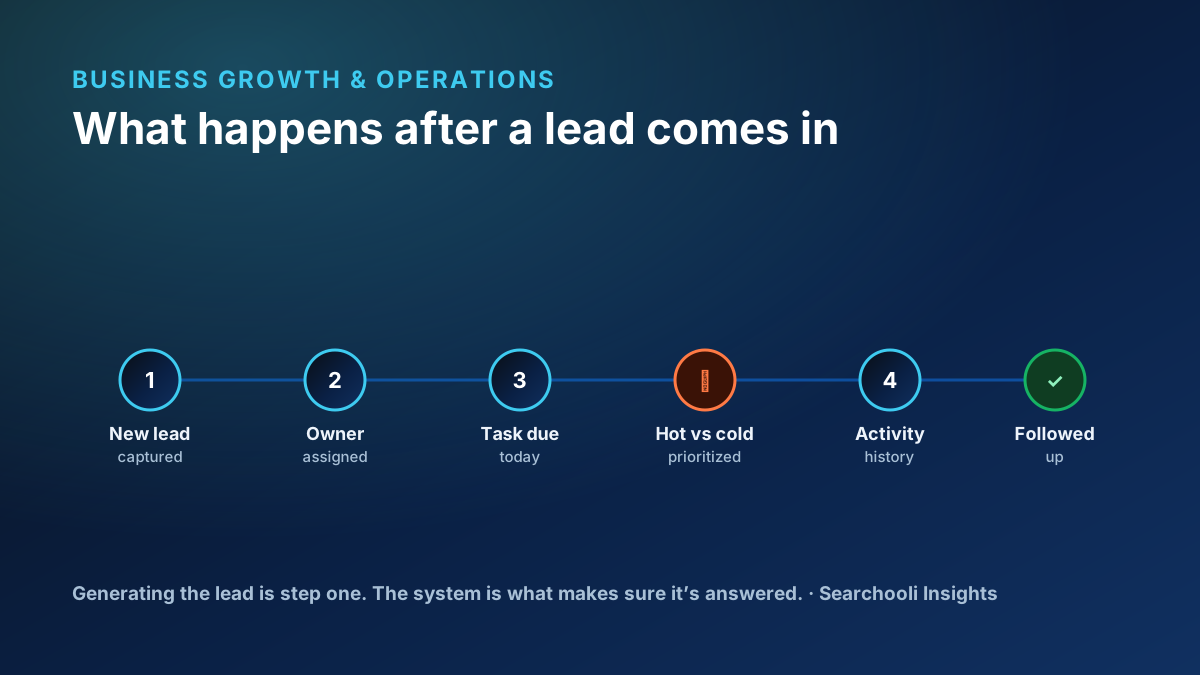
Short answer: Most small businesses don’t have a lead-generation problem — they have a follow-up problem. Leads come in and quietly go cold because no one owns them, there’s no clear next step, and there’s no record of what’s already happened. A follow-up system fixes that with a handful of simple pieces: every lead gets an owner, an immediate task, a priority (hot vs cold), a source, and a visible activity history — so a real person actually responds, consistently, without the owner having to hold it all in their head.
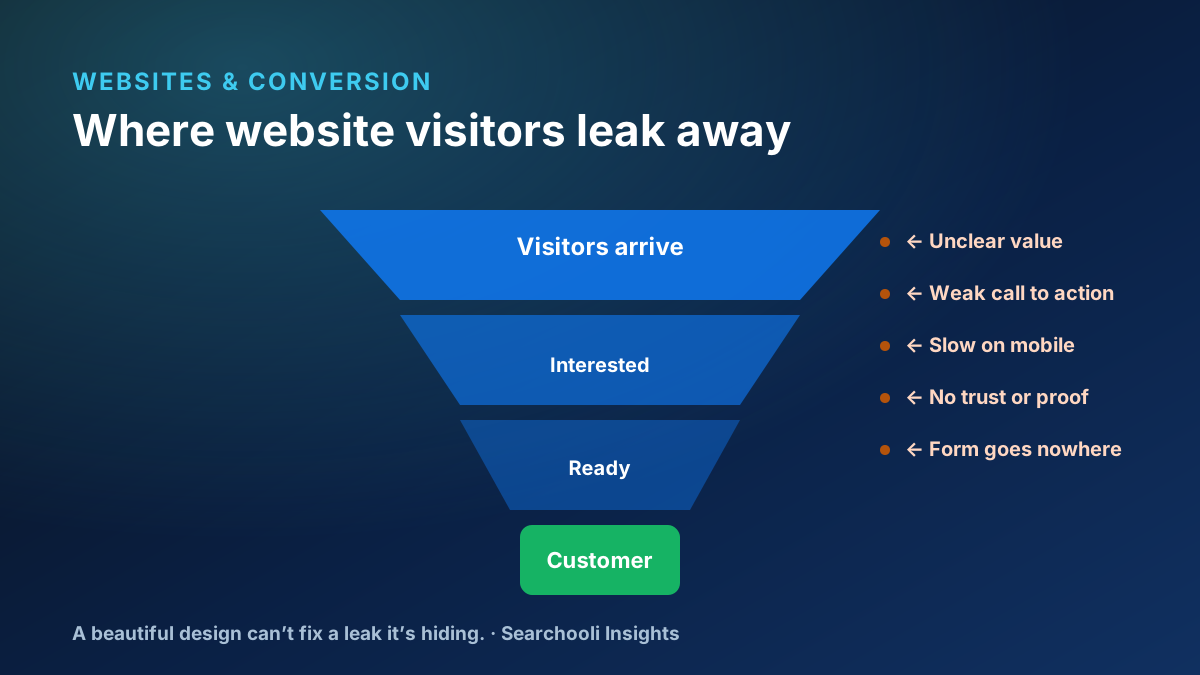
You can spend real money getting found and still grow slowly, because the leaks aren’t at the top of the funnel — they’re right after a lead comes in. Here’s the system that closes them.
Lead generation is step one, not the finish line
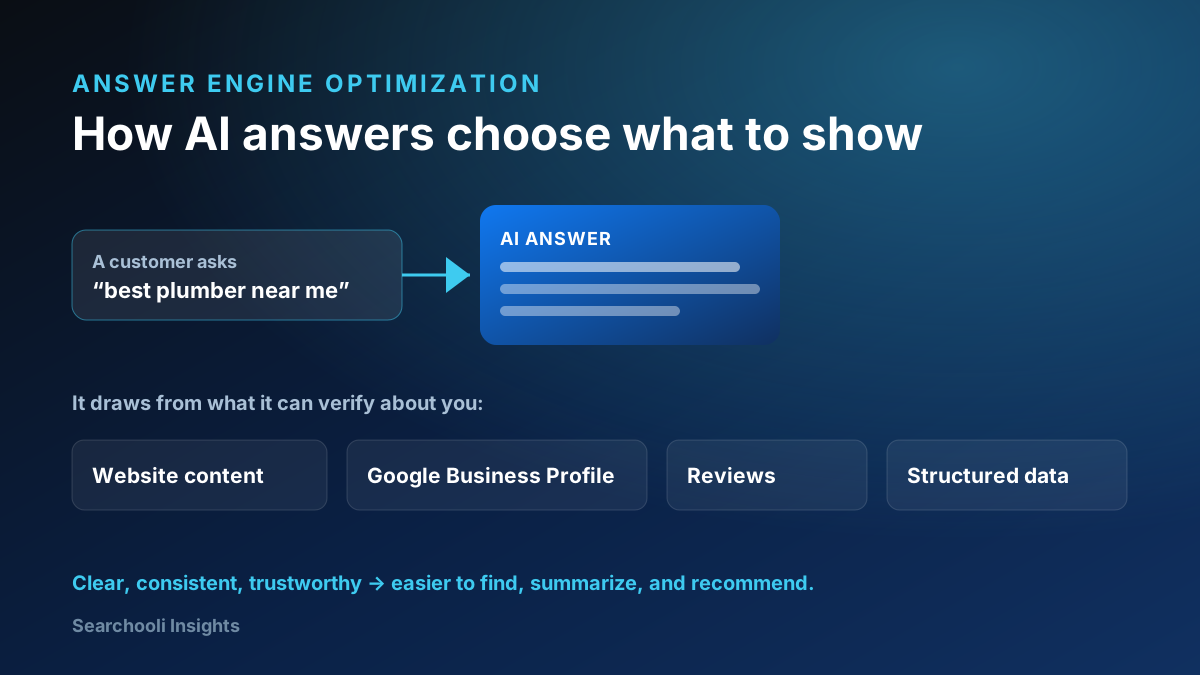
Getting found — in search, in AI answers, on Google Maps — brings people to your door. But the door is where most businesses fumble. A form gets submitted and sits unread. A voicemail is heard but not acted on. A promising conversation happens and then… nothing, because everyone assumed someone else was handling it.
The five parts of a follow-up system
You don’t need an enterprise CRM. You need these five things to be true for every single lead.
1. Ownership and assignment
Every lead has one name attached to it. “The team” is not an owner. When responsibility is shared by default, it evaporates — the classic way good leads die is that each person assumes another already called.
2. An immediate next task
A lead without a next action is a lead you’ll forget. The moment one comes in, there should be a concrete task — “call today,” “send the quote” — with a due date, not a vague intention.
3. Priority: hot versus cold
Not every lead is equal. A ready-to-buy inquiry and a someday-maybe browser both deserve follow-up, but not the same urgency. Flagging hot leads so they rise to the top means your best opportunities get answered first, while the rest aren’t forgotten.
4. Source attribution
Knowing where a lead came from — a Google search, your Business Profile, a referral, the website form — tells you what’s actually working, so you invest in the channels that produce customers instead of guessing.
5. A visible activity history
Every touch should be recorded: called, left a message, emailed, booked. Without a history, follow-up becomes repetitive and awkward (“didn’t we already talk?”), and a lead handed between people starts from zero every time.
A shared inbox that’s “everyone’s job” is where good leads go to be forgotten. Ownership is the cure.
Today and Outreach: making the system run itself
The pieces above only help if they’re in front of the right person at the right time. That’s the difference between a system and a spreadsheet nobody opens. Two simple views do most of the work:
- Today — everything that needs attention now: new leads to answer, tasks that are due, hot inbound to respond to. Start here every morning and nothing urgent slips.
- Outreach — the organized queue of who to follow up with next, so consistent follow-up happens by default instead of depending on memory.
Missed calls and unanswered forms
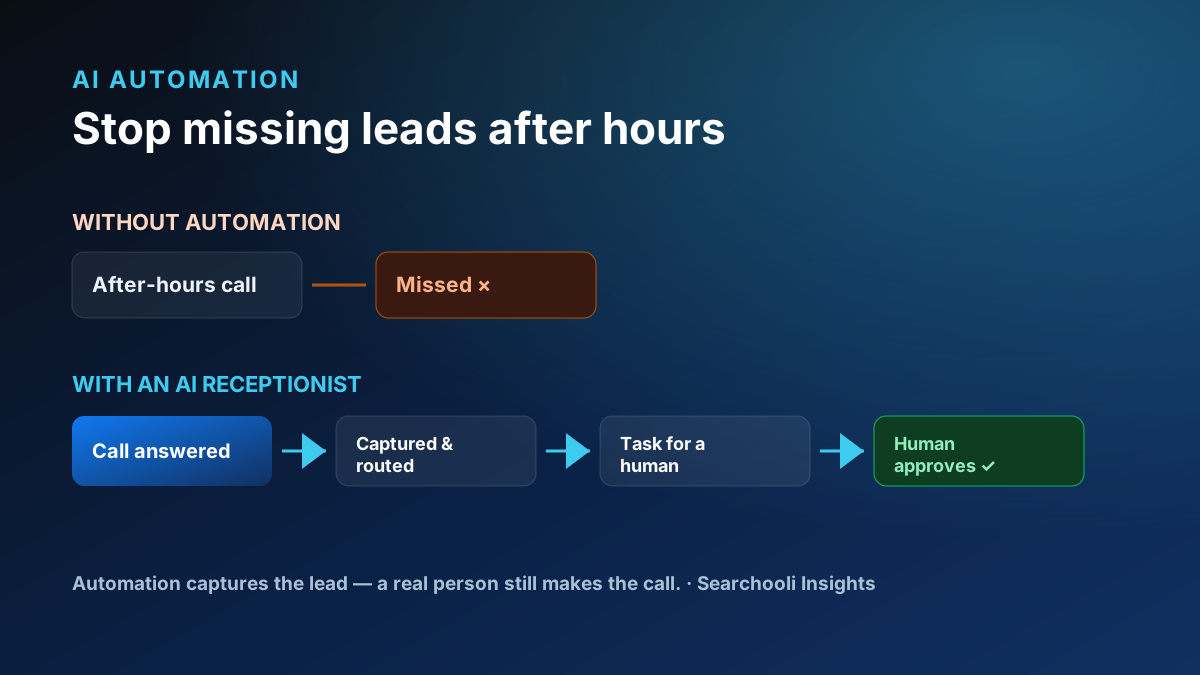
Two specific leaks deserve special attention because they’re so common and so costly. A missed call with no callback and an unanswered form are both customers who chose you and then heard silence. A real follow-up system treats both as first-class leads — captured, owned, and queued — not as noise. (Catching them in the first place is where AI automation helps you stop missing leads, and making sure your website form actually reaches a person is the same fight.)
Consistency without overwhelming the owner
Here’s the fear every small-business owner has: that “more process” means more work for them. Done right, it’s the opposite. The system carries the memory — the tasks, the priorities, the history — so the owner isn’t the single point of failure. You follow up more consistently and think about it less, because the next right action is always in front of you.
Signs your follow-up is quietly leaking
Most owners assume their follow-up is fine — right up until they look closely. These are the everyday symptoms that it isn’t:
Warning signs
- You can't quickly say how many leads came in this week.
- Leads live in a shared inbox or a notebook, not a system with owners.
- Follow-up depends on someone remembering, not a task that's due.
- You've caught yourself asking a customer something you already asked.
- Nobody's sure whether a specific lead was ever called back.
- Hot, ready-to-buy leads wait as long as cold ones.
- You don't know which channel your best customers came from.
If even two or three of those ring true, you’re likely losing business you already paid to earn — not because the leads are bad, but because the hand-off after they arrive is informal.
Start small — it doesn’t take a big software project
The good news is that fixing this rarely requires an expensive tool or a months-long rollout. You can get most of the benefit by making four things non-negotiable, starting this week:
- Assign every new lead an owner the moment it arrives.
- Create one concrete next task with a due date for each.
- Flag the obviously hot ones so they jump the queue.
- Write down every touch, so anyone can pick up the thread.
Do those consistently and you’ve already closed most of the leaks. A dedicated system just makes them automatic and effortless instead of something you have to remember — which is the difference between a good week and every week.
Human accountability, always
A follow-up system organizes and reminds; it doesn’t take over the relationship. A person still makes the call, gives the advice, and owns the outcome. That’s a feature, not a limitation — customers can tell the difference between a real response and an automated brush-off, and the trust that closes business comes from the human part.
This is exactly how Searchooli built its own platform, DailyFlo, and it’s a fair operational example of the principle: a lead becomes a tracked record with an owner, a due-today task, a hot/cold flag, a source, and an activity history, surfaced in Today and Outreach. We won’t expose the private architecture or invent conversion numbers — the point is the shape of the system, which any business can adopt.
Where Searchooli fits
We build the capture-and-follow-up system as one connected whole — AI Automation to catch leads, a managed website that hands them off cleanly, and a follow-up workflow that keeps a human accountable (more on our approach). The fastest way to see your own gaps is the free review below. Browse more in Business Growth & Operations.
The honest bottom line
You’ve probably already earned more leads than you realize — they just went cold after they came in. Give every lead an owner, a next step, a priority, and a history, put “today’s work” in front of the right person, and keep a human on the outcome. That’s the whole system, and for most small businesses it’s the highest-return thing they’re not doing.