
Short answer: Answer Engine Optimization (AEO) is the practice of making your business easy for AI-powered answers — like Google’s AI Overviews and AI Mode, and assistants people ask directly — to find, understand, trust, and summarize accurately. For a local business, AEO isn’t a new system that replaces search engine optimization. It’s the same foundation of clear, trustworthy, well-organized information, with more weight on clarity and consistency because a machine is now doing the summarizing.
More and more, the first thing a customer sees isn’t a list of ten blue links — it’s a short answer assembled by AI. This article explains, in plain terms, how those answers get built, how AEO and SEO fit together, and the practical first steps that actually help.
What “answer engines” are — and why they matter now
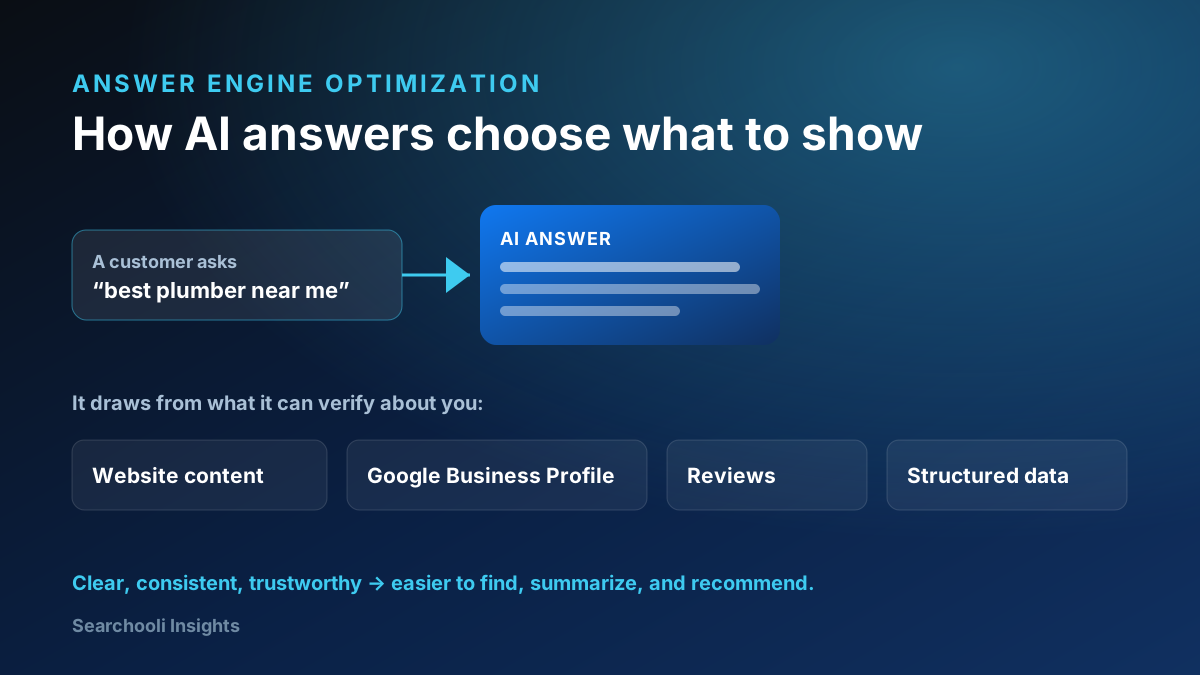
An answer engine is any tool that responds to a question with a direct, summarized answer instead of just a list of pages. That includes Google’s AI Overviews and AI Mode, as well as AI assistants people use to ask things like “who’s a good plumber near me?”
The important shift for a local business is this: the answer engine reads about you, then decides — on the customer’s behalf — whether to mention you and what to say. You don’t write that answer. You influence it by being clear, consistent, and verifiable everywhere the engine looks.
How AEO and SEO fit together
Here’s the part that saves you from a lot of hype: AEO and SEO are mostly the same work. Google has been direct about this. For its AI features, there are no special files to create, no secret tags, and no unique schema you must add — the same foundational best practices apply: meet the technical requirements for Search, follow the policies, and focus on helpful, reliable, people-first content (Google Search Central: AI Features and Your Website).
So if someone sells you a brand-new “AEO system” that supposedly replaces SEO, be skeptical. What’s really changing is emphasis:
- Clarity matters more. A machine summarizing you rewards plain, unambiguous statements over clever marketing language.
- Consistency matters more. When your name, services, and location say the same thing on your site, your Google Business Profile, and elsewhere, you’re easier to trust.
- Proof matters more. Reviews and real, specific detail help an answer engine feel confident including you in the answer.
Google still needs to be able to crawl and render your pages, and it still rewards a good page experience — fast, secure, mobile-friendly pages — as part of its ranking systems. In other words, strong technical SEO is not optional in an AEO world. It’s the ground you build on.
How an AI answer actually chooses what to show
You don’t get a peek inside the model, but the practical inputs are no mystery. An answer about a local business tends to draw from what it can find and verify:
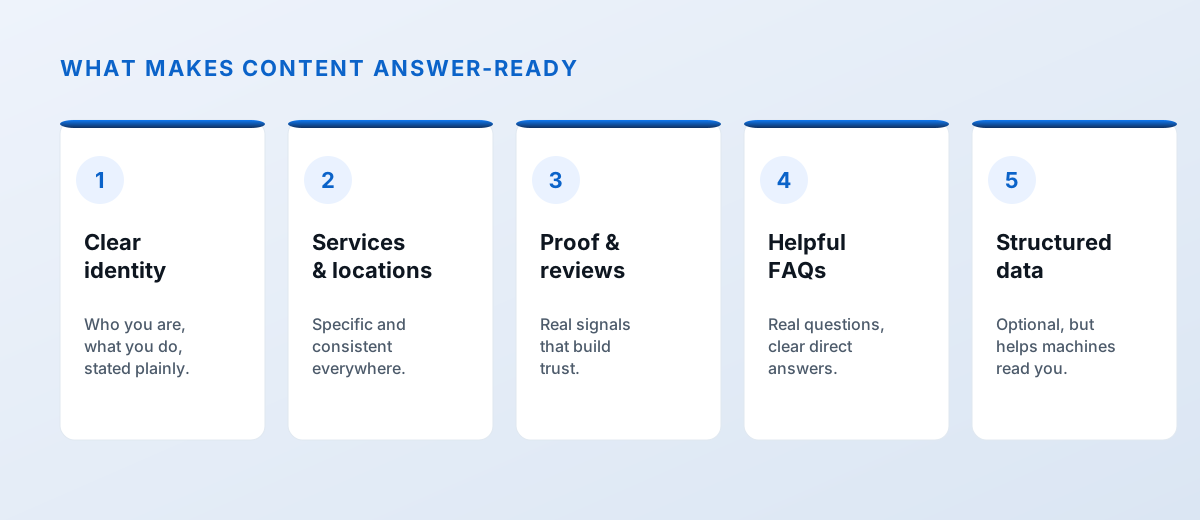
- Your website content — what you say you do, for whom, and where.
- Your Google Business Profile — category, services, hours, and location signals.
- Your reviews and reputation — what other people say, and how you respond.
- Structured data — optional machine-readable hints about your pages.
When those sources agree and are specific, an answer engine has an easy, low-risk decision. When they conflict — a different phone number here, a vague category there, no recent reviews — it has every reason to summarize a competitor instead.
You don’t win an AI answer by gaming it. You win it by being the clearest, most consistent, most trustworthy option it can find.
Why clear entities, services, locations, and proof matter
“Entities” is just a technical word for the real things your business is about: who you are, what you offer, and where you serve. Answer engines are good at connecting these when you state them plainly and repeat them consistently.
A few examples of the difference:
- Vague: “We do it all for your home.” Clear: “Licensed plumbing repair and water-heater installation in Myrtle Beach, SC.”
- Vague: “Serving the area.” Clear: “Serving Horry County, including Myrtle Beach, Conway, and Surfside Beach.”
- Vague: “Great service.” Clear: a handful of real, specific reviews describing the actual job.
The clearer version isn’t just better marketing — it gives a machine the exact, unambiguous facts it needs to include you confidently.
Do you need structured data?
Structured data (schema.org markup) is a way to label your content so machines can read it more reliably — for example, marking up your business details or an FAQ. For AI Overviews specifically, Google says it isn’t required (Intro to Structured Data).
That said, it’s still worth doing as part of good SEO: it helps search engines understand your pages and can make you eligible for rich results in normal search. Think of it as a helpful accelerant, not a magic switch — and never as a substitute for clear content.
Practical first steps for a local business
You don’t need a big project to make real progress. Start here:
Your AEO starting checklist
- Say what you do, for whom, and where — in plain language on your homepage and key pages.
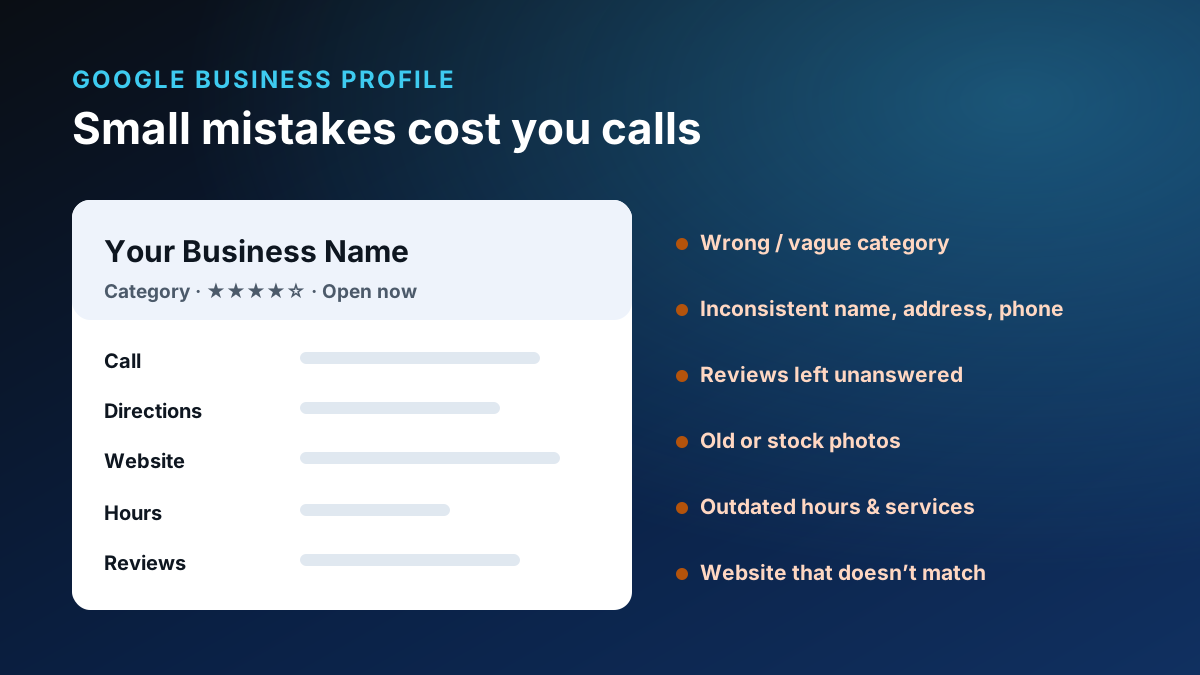
- Make your Google Business Profile complete and specific: the most accurate primary category, real services, current hours.
- Keep your name, address, and phone identical everywhere they appear.
- Earn and respond to reviews — a steady, honest stream beats a burst.
- Answer the real questions customers ask, directly, on your site.
- Make sure pages are fast, secure, and easy to use on a phone.
- Add structured data where it fits — but fix clarity and consistency first.
Notice that none of these are tricks. They’re the same things that make you easy for a human to choose — which is exactly the point.
How you’ll know it’s working
AEO doesn’t come with a tidy scoreboard, and that trips people up. There is no single “AEO rank” to check, and any tool that claims to give you one is selling certainty it doesn’t have. Instead, watch a few honest signals over time.
The most direct one is simple: search the way your customers do — by problem, not by your business name — and see whether you show up in the AI answer and the results beneath it. Do it from a logged-out, incognito window so you see something closer to what a stranger sees. Repeat it every few weeks; you’re looking for a trend, not a single snapshot.
For a more grounded view, Google Search Console is your friend. Google has confirmed that traffic from its AI features (like AI Overviews and AI Mode) is included in your overall Search performance and reported within the “Web” search type in the Performance report (AI Features and Your Website). So the same report you already use to watch impressions and clicks also reflects the visits AI answers send you — you don’t need a separate “AEO tool” to see the effect.
Where Searchooli fits
At Searchooli, we treat AEO and SEO as one connected system rather than separate services. We look at your website, your search and AI-answer readiness, your Google Business Profile, and your reputation together — because an answer engine sees them together. If you want the full picture, our SEO & AEO work is built around exactly this, and everything we do keeps a real person accountable for the result (more on our approach).
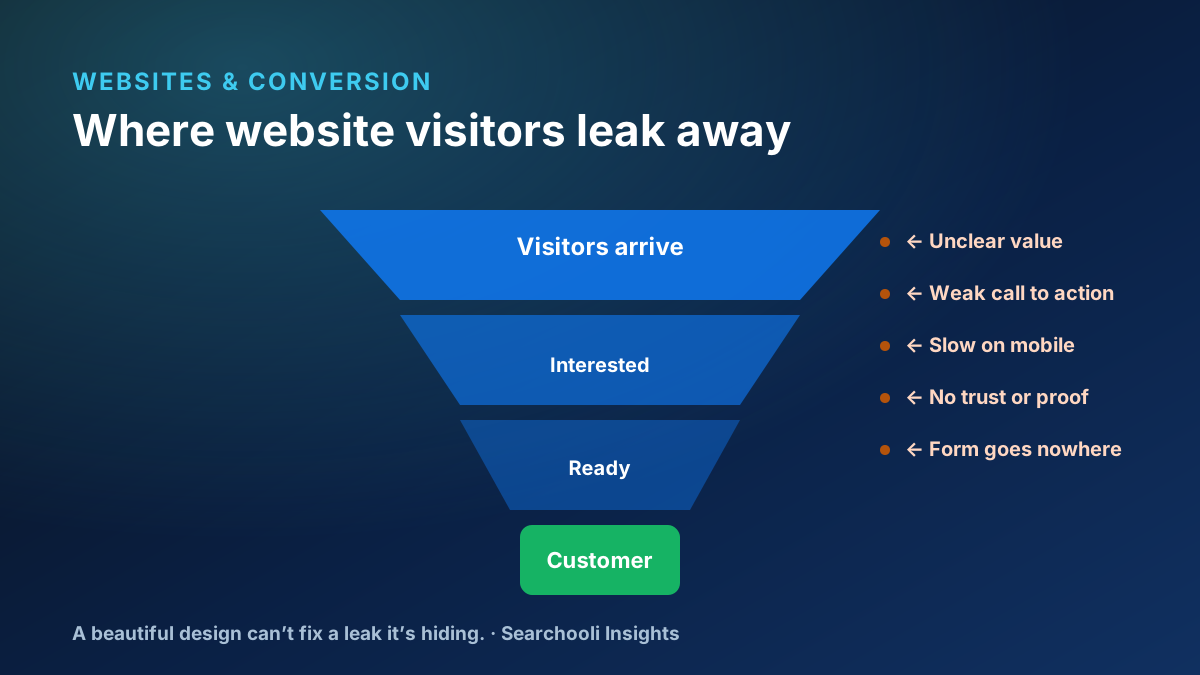
Two companion reads that connect directly to this: why a beautiful website still fails to generate leads, and the Google Business Profile mistakes that quietly cost local businesses calls. You can also browse more in SEO & AEO.
The honest bottom line
No one can guarantee you a spot in an AI answer, and anyone who promises it isn’t being straight with you. What you can do is stack the odds heavily in your favor by being the clearest, most consistent, most trustworthy business an answer engine can find. That work pays off in AI answers, in traditional search, and — most importantly — with the real people reading them.